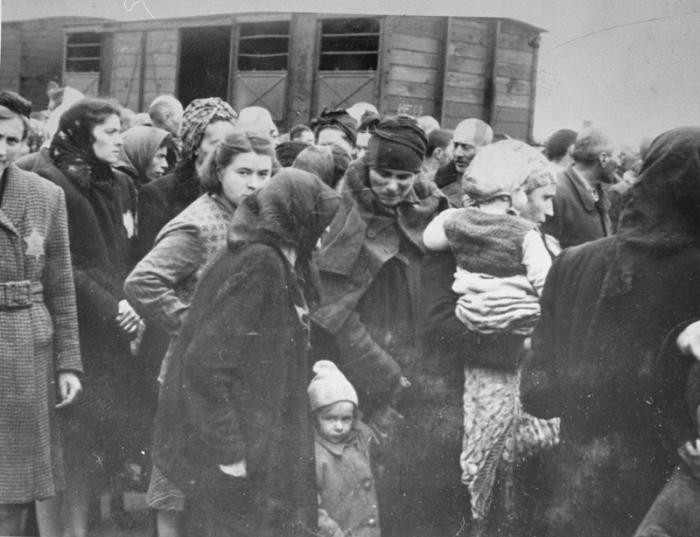

Many have faced defeat, but the way that we handle it is what’s remembered. After suffering a major defeat in World War 1, Germany looked for someone to blame and landed on the Jews. Antisemitism, the fear or hatred of jews, existed before then and was heavily tolerated by many Germans. However, after the war, the Nazi’s rose in power and established that German Jews had stabbed them in the back, causing the country to lose everything. Society trusted in their ideals and believed that these new government officials would bring back the country’s dignity. By agreeing to their new terms, Jews suffered extreme persecution. Later on, Germany remilitarized and prepared for a second war. It wasn’t until Germany invaded Poland in 1939 that the United States and other nations, still reeling from the Great Depression and recalling the horrors of World War I, took a significant step to protest. Up until December 1941, the United States maintained its neutrality in the Second World War. It placed more importance on overthrowing Nazi Germany than saving Jewish lives. As a result, the Holocaust began and six million innocent Jews were brutally murdered. Actions taken during the Holocaust, and those that weren’t, are the cause of many last letters to loved ones from Jews that were brutally murdered, such letters convey the idea that people react differently to the knowledge of their impending death. This is shown through Ida’s last letter to her sister, Aron’s last letter to his children, and is best revealed in the psychological theory known as the Terror Management Theory.

“I hoped that we would see each other again, but now I have lost all hope. Once, only once to have the chance to see you again, and then – may the worst happen.”
ida goldis
Someone who unfortunately faced this feeling of hopelessness due to the Holocaust is Ida Goldis. Ida was deported from the Kishinev ghetto to Transnistria with her son and younger sister. The three were forced to make this journey on foot, leading to the death of Ida from drinking contaminated water and the death of her son from the bitter cold. Before all of this transpired, Ida wrote to her sister back at home and explained how sorry she was for leaving her family so quickly. She writes, “I regret from the very depth of my soul that, on departing, I did not realize the importance of the moment, that I did not take a long, long look at you, so that your image would remain deeply engraved in my soul like an icon, that I did not hug you tightly, never releasing you from my arms.” Ida had hopes of escaping the hold of the Nazi’s and chasing after her dreams, so she left quickly without looking back, but was quickly faced with the reality of the situation. She had no control and she unfortunately realized this once it was too late. In ida’s letter, she comes to terms with everything and expresses her feelings on what’s to come. “Now I have no hopes left, God did not want us to meet again” she writes. In this time of awareness and grief, Ida does not hold back. Her feelings are at an all time high and to cope with them, she lets everything out. Ida chose to live in the truth, the truth that she would ultimately die just for being Jewish, leaving her sister with an extremely sad letter.
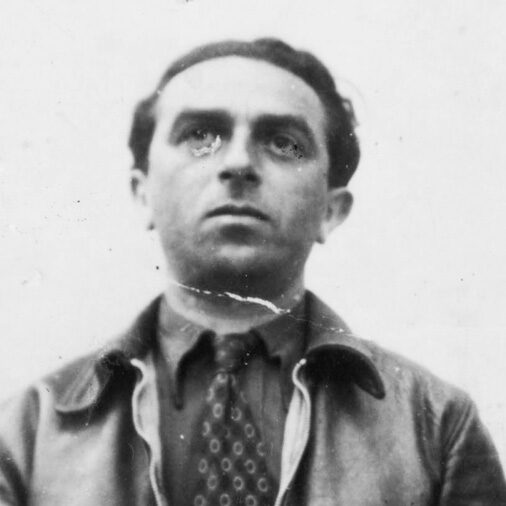
“Although meanwhile you are without your parents, don’t forget that you must survive, and don’t forget to be a Jew as well as a human being.”
Aron liwerant
Although many faced this harsh reality of dying for being jewish, some reacted in a different way. Aron Liwerant lived in Paris with his wife and three kids. After the occupation of France, Aron was ordered to register at the local police station in 1941. This was a trap and Aron was instead sent to an internment camp. He escaped but was caught again, deported, and then sent to his death by a deportation train. Before he was sent to die, Aron wrote a letter to his children telling them his fate. He left them with life lessons to follow. He writes, “Don’t forget that you must survive, and don’t forget to be a Jew and also a human being.” Although being a Jew is what got him here in the first place, Aron is not ashamed of his religion. He is not ashamed to be who he truly is and wants his kids to live that way as well. Like Ida, Aron had accepted his fate, but he chose his last words wisely. “Many kisses. I am going with confidence that you will grow up and be a good, healthy and smart girl” is Aron’s last line. These final words go beyond Aron’s current status. His statements of hope show a want for his children to maintain their individuality and freedom in the midst of everything taking place. He understands his circumstances and accepts his fate of never being able to see his children again, but decides to leave them something that may better their future. Arons final words are filled with love and a bittersweet departure, showing that his love goes beyond his death.

Ida and Aron both accepted their fate, but experienced their last days and the feelings that came with it differently. The Terror Management Theory (TMT) is one psychological theory that explains the range of responses people have when they realize they are going to die. According to this hypothesis, people are born with a fear of dying, which can cause anxiety and existential dread. Depending on their coping strategies, people may respond differently to situations that remind them of their mortality, such as receiving a terminal diagnosis or encountering a life-threatening circumstance, such as the Holocaust. Some, like Ida, may experience extreme sadness and regret, while others, like Aron, might find comfort in their beliefs and fate. The way that a person responds to the knowledge of death is also influenced by other factors, including personality traits, past experiences, and support systems. This can lead to differences in reactions, from acceptance and peace to denial and despair. Additionally, it’s important to note that Aron was a bit older while Ida was only 24 at the time of her death. This might play a role in why they expressed their final feelings in the way that they did. Aron got the chance to live his life and chase after any dreams that he might have had while Ida’s life had just started. She believed that she had time and a chance to achieve her goals, but Nazi Germany took that away from her. This is reflected in both letters and is potentially another reason why their letters are so different.
In summary, the Holocaust serves as an example of the depths of human sorrow and the range of reactions people might have to the realization that they would eventually die. We see differing responses to their approaching deaths through the heartfelt letters of Ida Goldis and Aron Liwerant. These responses are influenced by their individual lives, personalities, and the terrible facts of their situations. I believe that Ida’s deep grief and regret are a reflection of a life that was cut too short, one that was full of unmet hopes and the devastating knowledge that she had met her end. Aron’s farewell to his kids, on the other hand, shows strength and an unwavering dedication to who he is, even in the face of adversity. I think that both loved their families very much and missed them dearly, but their emotions were portrayed differently in the end. The Terror Management Theory shows how facing death can cause a range of emotions, from acceptance to despair. These letters and the experiences behind them should be used as an example of the tragedies that can occur if people accept beliefs rooted in hatred and act once it’s too late.
Works Cited
“Frequently Asked Questions about the Holocaust.” United States Holocaust Memorial Museum, https://www.ushmm.org/teach/fundamentals/holocaust-questions. Accessed 16 October 2024.
“9 October 1941: Kishinev Ghetto | Last Letters from the Holocaust.” Yad Vashem, https://www.yadvashem.org/yv/en/exhibitions/last-letters/1941/goldish.asp. Accessed 16 October 2024.
Solomon, S. “A dual-process model of defense against conscious and unconscious death-related thoughts: an extension of terror management theory.” PubMed, https://pubmed.ncbi.nlm.nih.gov/10560330/. Accessed 16 October 2024.
“3 March 1943: Deportation train, France | Last Letters from the Holocaust.” Yad Vashem, https://www.yadvashem.org/yv/en/exhibitions/last-letters/1943/liwerant.asp. Accessed 16 October 2024.
“The United States and the Holocaust | Holocaust Encyclopedia.” Holocaust Encyclopedia, 12 March 2024, https://encyclopedia.ushmm.org/content/en/article/the-united-states-and-the-holocaust. Accessed 16 October 2024.
Pyszczynski, Tom. “What Are We So Afraid Of?: A Terror Management Theory Perspective on the Politics of Fear.” Social Research: An International Quarterly, vol. 71 no. 4, 2004, p. 827-848. Project MUSE, https://dx.doi.org/10.1353/sor.2004.0012.
Leave a Reply